1. Material Make-up and Ceramic Processing of Alumina Pots And Pans
1.1 From Bauxite to Dense Ceramic: The Production Trip
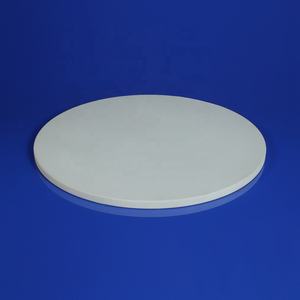
(Alumina Ceramic Baking Dish)
Alumina ceramic cooking meals are made from light weight aluminum oxide (Al ₂ O FIVE), a synthetic ceramic compound obtained mainly from bauxite ore with the Bayer procedure.
The raw alumina powder, generally 90– 99.5% pure, undergoes milling to achieve a fine particle size circulation, which is important for consistent densification during forming and sintering.
To form the baking meal, the powder is combined with binders and plasticizers, after that developed making use of methods such as slip casting, uniaxial pressing, or isostatic pressing to produce a “green” body with the desired geometry.
After forming, the green body is dried and terminated in a high-temperature kiln at temperature levels in between 1400 ° C and 1600 ° C in an oxidizing environment.
This sintering process repel natural additives and induces atomic diffusion, causing a thick, polycrystalline microstructure with very little porosity– typically less than 2%.
The end product is a fully consolidated ceramic with high mechanical stamina, chemical inertness, and outstanding thermal security, making it appropriate for repeated exposure to oven environments.
1.2 Microstructural Attributes and Phase Pureness
The efficiency of alumina cooking meals is very closely linked to their microstructure, which consists of arbitrarily oriented Al two O four grains varying from 1 to 10 micrometers in size.
Higher-purity solutions (e.g., 99% Al Two O SIX) display greater thermal shock resistance and chemical durability, while lower-purity grades might include secondary phases such as mullite or glassy grain limit stages that can lower mechanical strength at raised temperatures.
Suppliers usually maximize grain dimension and circulation to balance strength and thermal conductivity, making sure the recipe can hold up against fast temperature level modifications without splitting.
Unlike glazed ceramics or porcelain, premium alumina baking recipes are fully thick and non-porous, removing the threat of fluid absorption and microbial growth– a substantial advantage for food safety and lasting hygiene.
This intrinsic impermeability also protects against taste transfer between various foods, making alumina suitable for functional cooking area use.
2. Thermal and Mechanical Habits in Food Preparation Environments
2.1 Thermal Conductivity, Retention, and Attire Heating
Alumina porcelains have modest thermal conductivity– roughly 20– 30 W/m · K– higher than a lot of glass or porcelain cooking equipment but less than metals like aluminum or copper.
This residential or commercial property makes it possible for gradual and also warmth distribution across the meal, decreasing locations that can cause unequal cooking or scorching.
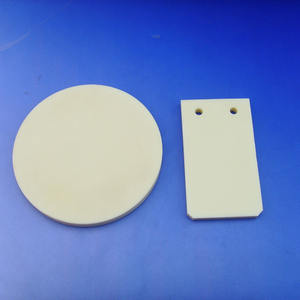
( Alumina Ceramic Baking Dish)
Once heated, alumina shows exceptional thermal retention as a result of its high warmth capacity, allowing food to continue to be cozy for extensive periods after removal from the stove.
This characteristic is specifically useful for offering recipes, covered dishes, and slow-cooked dishes where regular temperature is essential for texture and flavor development.
Moreover, alumina can endure continuous usage at temperatures up to 1500 ° C in commercial settings, though typical kitchen area ovens operate listed below 300 ° C, positioning very little tension on the material.
Its ability to sustain duplicated thermal biking– such as moving from freezer to oven or oven to kitchen counter– without deterioration makes it a sturdy choice for contemporary cooking applications.
2.2 Mechanical Strength and Durability Under Daily Use
Regardless of being a weak ceramic, high-density alumina provides superior solidity (Mohs hardness of 9, second only to diamond and cubic boron nitride), making it extremely immune to damaging, abrasion, and surface area wear.
This resistance ensures that the food preparation surface continues to be smooth and non-reactive in time, preventing food residue build-up and helping with simple cleaning.
While alumina meals are not immune to influence crack– especially if dropped on tough surface areas– they are considerably much more durable than standard earthenware or stoneware due to their fine-grained, low-porosity framework.
Numerous industrial alumina cooking meals are made with thick wall surfaces and enhanced rims to improve structural integrity and decrease breaking threats.
Furthermore, their chemical inertness ensures no leaching of metal ions or glaze components into food, even under acidic or alkaline cooking conditions, conference rigid food call safety and security criteria.
3. Practical Benefits Over Standard Kitchenware Materials
3.1 Contrast with Glass, Steel, and Enameled Steel
Compared to borosilicate glass (e.g., Pyrex), alumina porcelains offer superior thermal shock resistance and mechanical toughness, minimizing the likelihood of sudden crack throughout temperature level transitions.
Unlike metal baking trays, which can catalyze Maillard reactions exceedingly or respond with acidic active ingredients, alumina provides a neutral, non-catalytic surface area that protects food chemistry.
Enameled steel cookware, while durable, can subject underlying steel if damaged, bring about rust and contamination; alumina, being totally uniform, does not struggle with such delamination dangers.
Additionally, alumina’s non-porous nature eliminates the demand for flavoring or oiling, unlike cast iron, and stays clear of the potential for bacterial emigration in microcracks.
These useful advantages placement alumina as a hygienic, long-lasting, and performance-oriented alternative in both domestic and specialist kitchens.
3.2 Microwave, Stove, and Fridge Freezer Compatibility
Alumina ceramic cooking dishes are fully compatible with standard ovens, convection ovens, griddles, and freezers, enabling smooth transitions from storage space to cooking to offering.
They are also microwave-safe, as alumina is clear to microwave radiation and does not create eddy currents or arcing like metallic cooking equipment.
However, users need to make certain that no metallic paints or trims are present on attractive variations, as these can trigger triggering.
The material’s stability across a broad temperature variety– from ice-cold freezer problems to high-heat broiling– makes it ideal for preparing meals that need cooling before baking or ending up under a grill.
This versatility sustains contemporary cooking techniques such as sous-vide adhered to by scorching, or make-ahead meals that are frozen and reheated without container transfer.
4. Applications, Sustainability, and Future Dope
4.1 Culinary Uses and Industrial-Scale Cooking
Alumina ceramic cooking meals are widely used for toasting veggies, cooking covered dishes, preparing gratins, and serving straight at the table because of their aesthetic allure and heat retention.
In commercial kitchens, their resilience and resistance to thermal fatigue make them economical over time despite a higher initial price contrasted to disposable light weight aluminum trays.
They are likewise utilized in food handling laboratories and pilot plants for regulated thermal experiments, where product pureness and dimensional security are important.
Their inertness guarantees that experimental outcomes are not altered by container communications, a key consider dish growth and sensory screening.
4.2 Environmental Impact and Product Innovation
From a sustainability viewpoint, alumina ceramics have a high personified power as a result of sintering at extreme temperatures, however their long life offsets this via decreased substitute frequency and waste generation.
Unlike single-use light weight aluminum foil or plastic containers, a single alumina recipe can last years with proper care, contributing to round economic climate concepts in family items.
Recurring study concentrates on enhancing toughness via composite formulations– such as integrating zirconia or silicon carbide micro-inclusions– and creating energy-efficient sintering methods like microwave or trigger plasma sintering for greener production.
Furthermore, innovations in additive production may quickly enable customized, complex-shaped alumina kitchenware with incorporated thermal administration features.
In conclusion, alumina ceramic baking dishes stand for a merging of innovative materials scientific research and useful kitchen area functionality.
Their extraordinary thermal security, mechanical sturdiness, chemical inertness, and multi-environment compatibility make them above lots of standard cooking equipment products.
As consumer demand expands for risk-free, lasting, and high-performance kitchenware, alumina ceramics are positioned to play a significantly main function in contemporary cooking practices.
5. Vendor
Alumina Technology Co., Ltd focus on the research and development, production and sales of aluminum oxide powder, aluminum oxide products, aluminum oxide crucible, etc., serving the electronics, ceramics, chemical and other industries. Since its establishment in 2005, the company has been committed to providing customers with the best products and services. If you are looking for high quality martoxid alumina, please feel free to contact us.
Tags: Alumina Ceramic Baking Dish, Alumina Ceramics, alumina
All articles and pictures are from the Internet. If there are any copyright issues, please contact us in time to delete.
Inquiry us